Rules and approvals
We define who decides, which conditions must be met and what happens when a request is incomplete or rejected.
We connect your applications, approvals and business data so work can move from one stage to the next. We integrate AI where it can help, with clear rules and human oversight.
First conversation: 30 minutes, free. We start with one specific process.

Clear stages, defined ownership and fewer manual handoffs.
From our project portfolio







From separate tasks to a coordinated process
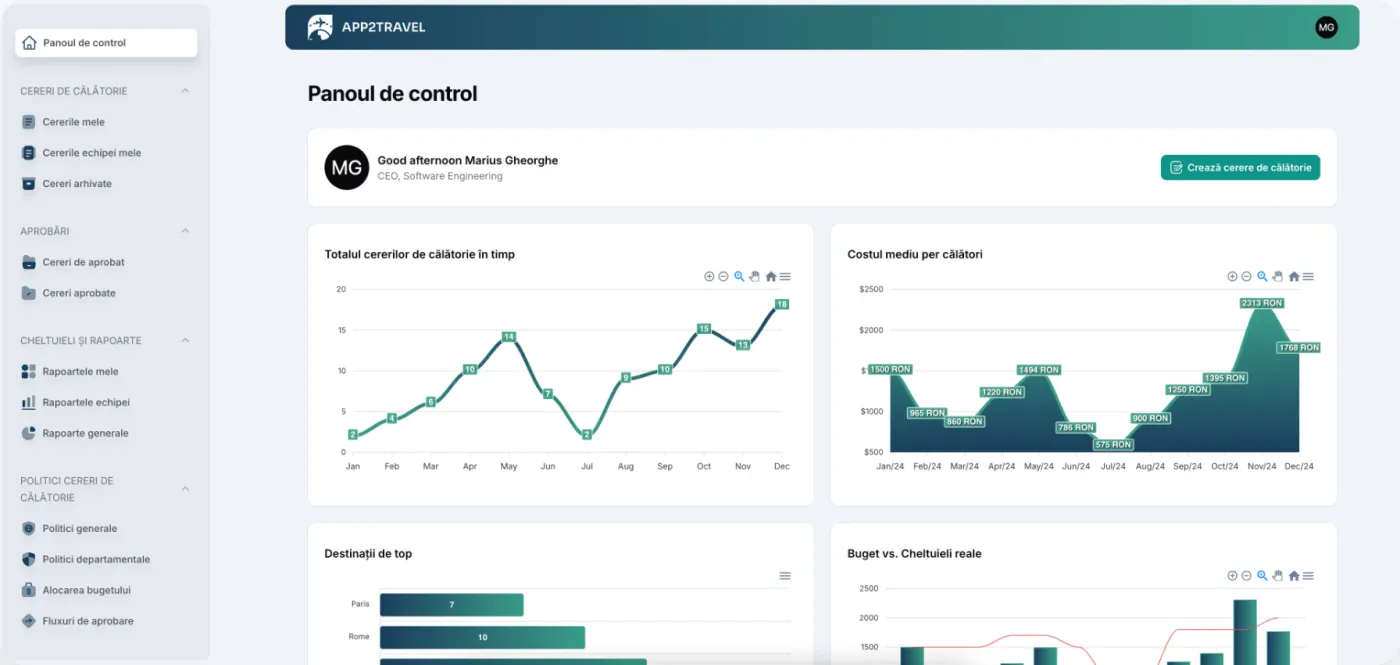
Orchestration defines how people and systems work together. Automation carries out the appropriate steps. The PPC Romania project shows how travel requests, approvals and cost information can come together.
Employee
Travel details are entered in a shared workspace.
Approvers
The request follows configured stages and responsibilities based on roles.
Operations and finance teams
Teams can follow request status, approval history and cost information together.
What we build around the process
We define who decides, which conditions must be met and what happens when a request is incomplete or rejected.
We connect ERP, CRM and internal applications through available interfaces. We establish the source of each data item and how synchronization errors are handled.
We assess where AI can help process documents or prepare information. We define the checks and decisions that stay with a specialist.
We design statuses, responsibilities and history so teams can follow cases, exceptions and points where work gets stuck.
Real processes. UP2DATE projects.
Two different contexts, the same need: keep information connected to the steps and people that use it.
PPC: centralized requests, configurable approvals and integration with ERP and HR.
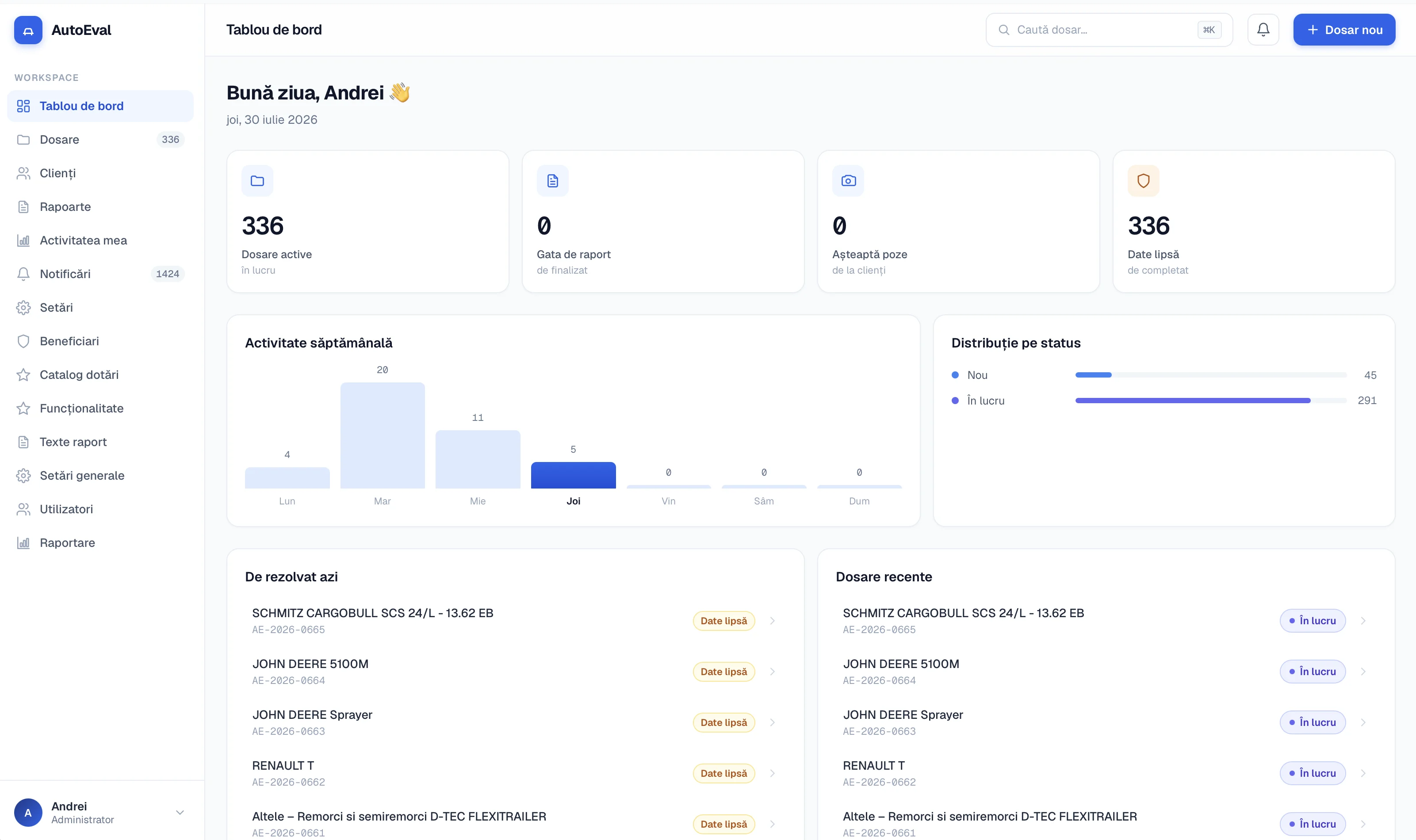
Read the case study — PPC RomâniaAutoEval: files, photos, technical data and PDF reports, with AI assistance. The specialist validates the final valuation.
Read the case study — AutoEvalA clear starting point
Together, we choose a bounded workflow with an owner and an intended outcome. It might be an internal request, a document workflow or an operation that spans several applications.
Let's discuss your processThe implementation estimate depends on systems, data access, exceptions and security requirements. We prepare it once the scope is clear.
We identify the stages, people, applications and places where delays or repeated work occur.
We clarify rules, integrations, exceptions and AI's role. We agree what belongs in the first implementation and what comes later.
We choose acceptance criteria and measurable indicators: processing time, blocked cases or manual interventions.
We do not assume replacement. We first check available interfaces and data, and whether the process can be built around your existing systems. Integration constraints influence the solution and estimate.
No. Explicit rules and integrations may be enough. We propose AI only for a defined role, with suitable data and verification criteria, retaining human approval where needed.
Yes. We define its input, outcome, owner and applications. A manageable first phase lets us verify the solution before extending automation.
We include them in the design: missing data, rejected requests, unavailable systems or AI outputs requiring review. We define who intervenes, how work resumes and what history is retained.
Briefly describe the process, the applications you use and the main bottleneck. We start with a free 30-minute conversation to clarify the next step.