Need an Android app development company?
Start with a free 30-minute conversation about your goals and constraints. Detailed analysis, solution design and estimates are scoped separately.
UP2DATE is an Android app development company specialized in native Kotlin, with Flutter as an option when one codebase fits. We test against a three-tier device matrix — including a sub-€200 reference phone — to cover 95%+ of real-world fragmentation, so Play Console policy and staged rollouts never blow up at launch.
A free 30-minute conversation to understand the situation and agree a next step. Detailed analysis is scoped separately.
Trusted by founders, scale-ups & enterprise teams











 Anteca
ConsultDesignBuildRun
This page assumes you already know what to build. Not sure yet? Start with a Product Discovery & Solution Blueprint or a Digital Process & Automation Assessment — sometimes the right answer is not new software.
Kotlin and Jetpack for the deepest platform integration — correct Material 3 theming, adaptive layouts for phones and tablets, edge-to-edge display and native performance. When a single codebase across Android and iOS fits better, we deliver the same quality with Flutter — and it looks right on a €150 Motorola and a Galaxy Fold alike.
Background services with WorkManager, home-screen widgets, Wear OS data layers, deep Bluetooth LE integrations and system-level accessibility services — when Kotlin is the right tool for the feature, we write it as a clean platform channel module.
We own the full Play Console pipeline: signing, release tracks, internal testing, closed beta, open beta and production. Staged rollouts to 10% → 50% → 100% with ANR and crash rate gates so a bad build never reaches your full user base.
We test against a tiered matrix — high-end flagship, mid-range workhorse, low-end entry device — covering the screen densities and Android versions that represent 95% of your target market. Firebase Test Lab runs automated UI tests across the matrix on every release candidate.
Data safety form declarations, sensitive-permission justifications, target SDK upgrades on Google's mandatory schedule and policy violation appeals — we handle the compliance paperwork so your app stays live and your account stays clean.
Android's long tail of low-RAM devices is where most apps fail silently. We profile memory pressure, jank frames and battery drain on a sub-€200 reference device before every release — not just on the flagship we develop on.
Android runs on thousands of device models across a decade of API levels. Here is how we make that manageable rather than pretending it is not a problem.
We tier devices by market share: flagship (Pixel, Galaxy S), mid-range (Galaxy A, Moto G), low-end (entry Xiaomi, sub-€150 Alcatel). Each tier gets a dedicated test pass for layout, performance and crash rate before any release.
We recommend a minSdk that covers at least 95% of your target market — typically API 26–28 for EU/US consumer apps, API 24 for enterprise with legacy device fleets. We document the trade-offs and let you decide.
Obfuscation rules audited for Flutter + Kotlin interop, third-party SDKs and reflection-heavy libraries. Missing keep rules are the silent cause of half the post-obfuscation crashes we see in inherited codebases.
Every release candidate is run through Play Store pre-launch report — automated crawl on real devices in Google's lab. We review the accessibility, performance and crash findings before approving promotion to production.
Kotlin and Jetpack (WorkManager, Room, Navigation) are our native Android layer. Flutter and Dart when a single codebase across platforms fits. Play Console for delivery, Firebase for crash reporting, analytics and remote config, Material 3 for design system compliance.
We do not use Cordova, Ionic or legacy Java for new projects. If a project warrants fully native Kotlin from the ground up — heavy Jetpack Compose customisation, system-level features or an existing Java codebase — we say so before you commit.
No. If the scope is clear, we start from a normal first conversation. When the problem or the return is still fuzzy, a short paid assessment settles what to build — or whether to build at all.
Native Kotlin is our specialty — the right call for apps that live close to the OS (a launcher, an accessibility service, a device-management app), that lean on Jetpack/Compose deeply, or that extend an existing Kotlin/Java codebase. Flutter makes sense when you need or may need iOS coverage, want a single codebase to maintain, or are building a standard B2C or B2B product without deep system-level requirements. We give you a straight recommendation in a 30-minute call before any scope is signed.
We do not try to test on thousands of devices — we test on a representative matrix. We define three device tiers (flagship, mid-range, low-end) aligned to your target market's actual install base, then automate UI tests across that matrix using Firebase Test Lab. That catches 95%+ of fragmentation issues without an unmanageable test surface. For critical releases we also run manual exploratory sessions on physical devices at the boundary cases.
We treat Play policy compliance as a first-class engineering concern, not a last-minute form to fill in. During development we audit every permission requested, every data point collected and every third-party SDK for its own data practices. The data-safety form is drafted alongside the app, not the night before launch. If a policy update affects your live app, we flag it, implement the required change and submit the update within the mandatory timeline.
Yes. We start with a codebase audit covering architecture health, minSdk and targetSdk currency, dependency vulnerabilities and any outstanding Play Console warnings. From there we can maintain and extend the existing codebase, modernise from Java to Kotlin, or plan a gradual migration to Flutter where that makes sense for your product. We give you an honest picture of the technical debt before we agree a scope.
Staged rollouts and pre-launch reports on Play Console add steps that the App Store does not have, so timelines account for those gates. A focused MVP — core features, authentication, two to four screens — typically reaches production in eight to twelve weeks. Projects that include a custom backend, hardware integrations (Bluetooth LE, barcode scanners) or regulated data handling run four to six months. Play Store review itself is fast: one to three business days for new apps, often same-day for updates once your account has history. We ship weekly internal builds from sprint one so progress is visible throughout the engagement.
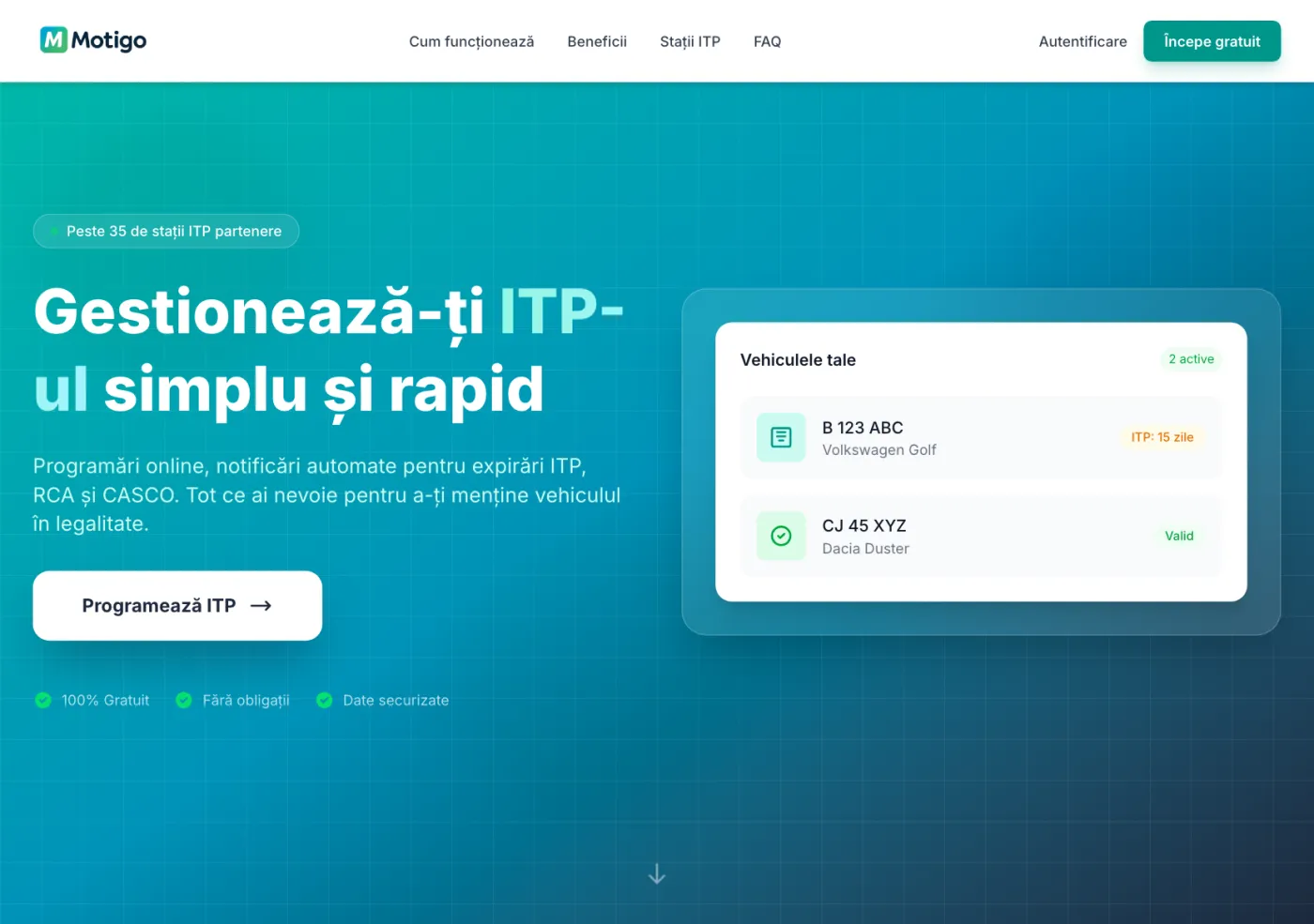 Mobile app
A platform that keeps Romanian drivers and fleets road-legal — online ITP booking, automatic ITP/RCA/CASCO expiry reminders and fleet management, with a companion Android app.
Start with a free 30-minute conversation about your goals and constraints. Detailed analysis, solution design and estimates are scoped separately.